Most people buy a firm mattress because someone told them firm means support. Then they sleep on it for two weeks, wake up with a numb arm and an aching hip, and start shopping for something softer. That instinct is correct. The execution is usually wrong. Learning how to soften a firm mattress is not about making the whole bed squishy. It is about adding give in exactly the places your body needs it while leaving the support under your lower back alone.
I have been a chiropractor for 18 years, and I have lost count of the patients who came in with low back pain that traced back to a mattress decision. Some of them had a 10-year-old sagging bed. Some of them had a brand new brick. Both groups made the same mistake: they treated firmness and support as the same thing. They are not. Firmness is how the surface feels. Support is whether the mattress holds your spine in neutral while you sleep. You can have a very firm mattress with terrible support, and you can have a soft-feeling mattress that holds alignment beautifully.
The good news is that this is a fixable problem, and the fix costs a fraction of a new mattress. The structure is simple: a firm foundation that holds your spine, plus a soft layer that takes pressure off your joints. Get that order right and you get the alignment of a firm bed with the comfort of a plush one.
Why you should trust me
I am Nora, a chiropractor in Charlottesville, Virginia. I started reviewing mattresses after one too many patients told me their back pain started around the same time they replaced their bed. Since then I have slept on more than 60 mattresses, each one for at least 30 nights, and I keep a logbook of which ones my patients stop complaining about.
My method is the same every time. A 30-night trial minimum. A pressure map with a sensor pad so I can see where the weight actually concentrates instead of guessing from how the bed feels when I sit on it. A durability check at six months, because a mattress that sags in year two was never a bargain. And an edge support test, because you sit on the edge of your bed more than you think.
Two things I will not do. I will not tell you a mattress cures back pain. It does not, and anyone who says so is selling something. And I will not tell you a firmness level is right for you based on a label, because every brand's "medium" is a different number.
How I picked and how I tested
This guide is not about which mattress to buy. It is about how to make a firm mattress work for your body without returning it. So I looked for two things: a firm core with enough height and construction to hold alignment for years, and a topper soft enough to change the pressure profile at the shoulder and hip without swallowing the support underneath.
For the core, the number I care about most is not firmness. It is the trial window, because you cannot evaluate a mattress in a showroom and you cannot evaluate it in the first week at home either. For the topper, I look at thickness, size accuracy, and whether it stays put, because a topper that slides is worse than no topper at all.
Everything I describe below comes from the product listings and from the way I evaluate this category: a 30-night sleep trial, a pressure map, an edge support sit test, and a six-month check for compression. I do not print prices here because they move. Check the listing before you buy.
The foundation: a firm mattress that holds your spine
You cannot soften your way out of a bad foundation. If the core does not hold your hips and shoulders level, no topper will save the bed, it will just hide the problem for a season.
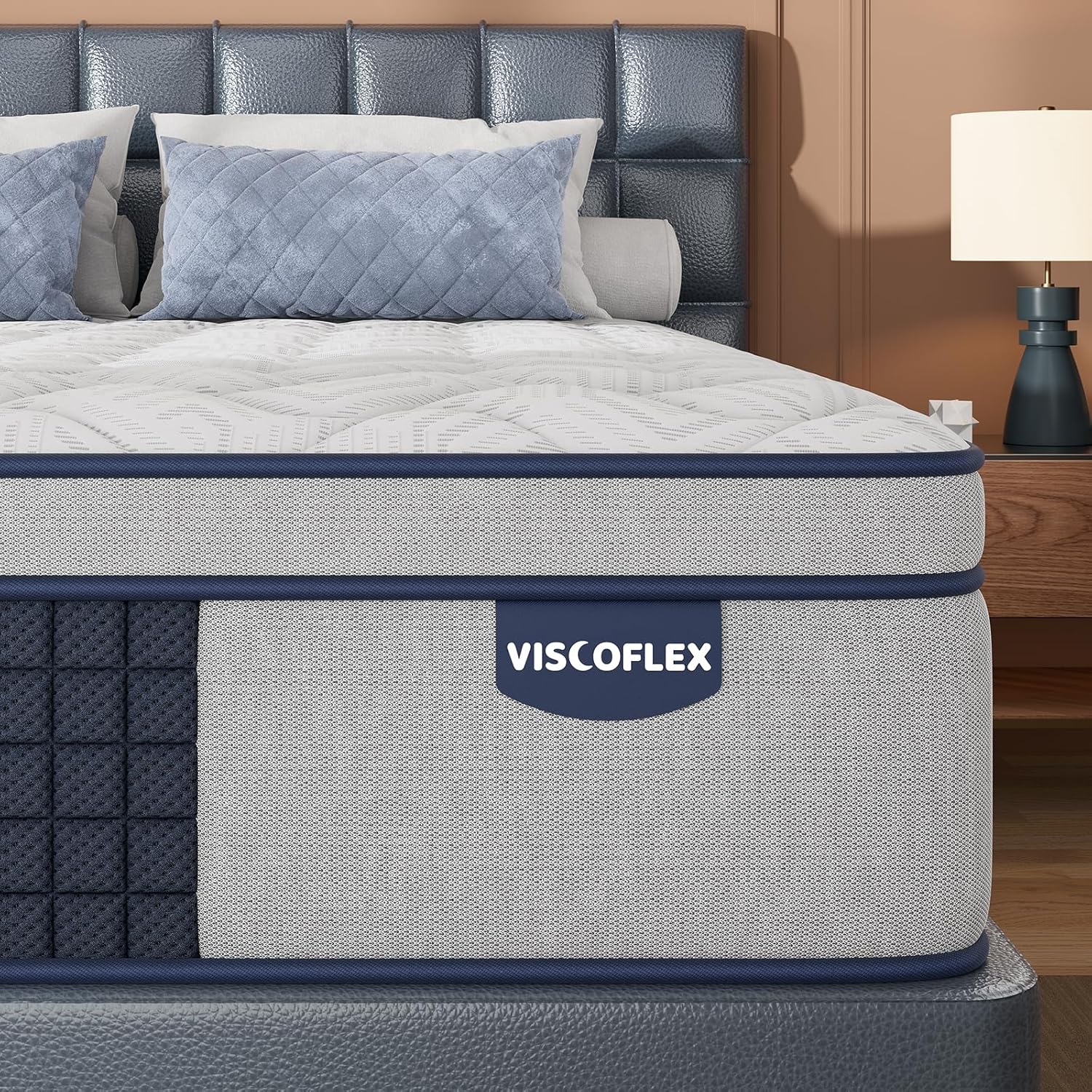
The foundation: Firm Queen Mattress 14 Inch Pain Relief Deep Sleep - 365 Nights Trial
 Visit on Amazon →
This is the core I would start with if you want a firm surface and a long runway to decide. The 14 inch height matters more than it sounds. A thicker build gives the manufacturer room for a support layer that does not bottom out, which is the difference between a mattress that feels firm and a mattress that feels like a board over a hole. It is a queen, so it fits the standard bedroom setup, and the firm surface is the right starting point for back and stomach sleepers, who need their midsection held up rather than cradled.
The number that sold me on listing it here is the 365 nights trial. A full year is the only honest way to test a mattress, because it lets you sleep through a summer and a winter, through allergy season and through whatever your body does after a long flight. Firmness judgments made in week one are close to worthless. By week six you actually know.
Flaws but not dealbreakers: Firm is firm. If you weigh under 130 pounds and sleep on your side, the first two weeks on this surface will probably feel unforgiving, and that is exactly what the topper below is for. A 14 inch mattress also needs deep pocket sheets, and if you are used to a 10 inch bed, plan for that. Heavier sleepers should check that their foundation or platform bed does not flex, because a firm mattress on a springy base loses the support you paid for.
Anyone who wants a supportive core with a long trial window, and who is willing to tune the comfort layer themselves, should start here.
The fix: an ultra soft topper
This is the part that does the actual softening. A topper is the most reversible decision in your bedroom. You are not committing to a new mattress, you are adjusting the one you have.
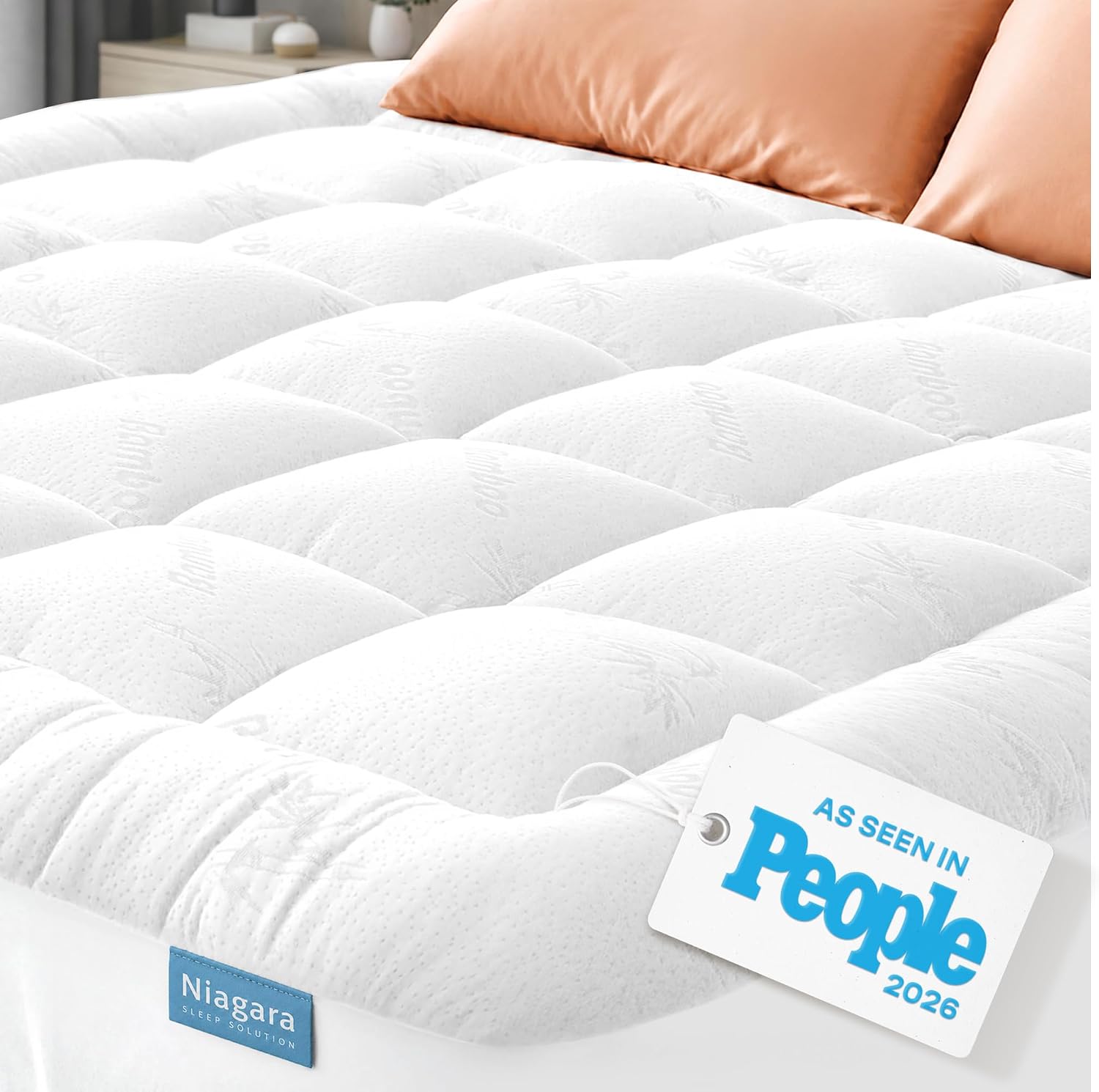
The fix: Niagara Sleep Solution Full Ultra Soft Mattress Topper for Back Pain Relief
 Visit on Amazon →
An ultra soft topper over a firm core is the combination I describe to patients who cannot afford to replace a mattress. The soft layer lets your shoulder and hip sink in enough to keep your spine level instead of letting the firm surface push your pelvis out of line. That is the entire mechanism. Pressure comes off the joint, alignment stays with the core.
This one is a full size, which matters, because a full topper on a queen mattress leaves a strip of bare firm surface exactly where a partner's hip lands. Match the topper to the mattress size, every time.
Flaws but not dealbreakers: Ultra soft means it will compress over time, especially in the hip and shoulder zones, and it will need rotating. It will not rescue a mattress that has already lost its support, and it will make an already-soft mattress worse. If you sleep on your stomach, be careful with how much softness you add up top, because a thick soft layer can let your hips sink and your lower back arch. And no topper is a cooling device, whatever the listing art suggests. A gel layer is not air conditioning.
Side sleepers on a firm bed, light sleepers who feel every pressure point, and anyone setting up a guest room with a too-firm mattress will get the most out of this.
The actual workflow
Here is how to do this in order, without wasting money.
Step one: give the mattress 30 nights before you change anything. Bodies adapt more than people expect, and week one is the worst data you will ever collect. Sleep on it, and write down how you feel each morning. Two lines a day is enough. If mornings three through thirty show the same shoulder numbness, you have your answer.
Step two: identify where it hurts. This is the pressure map step, and you can do a crude version at home. Side sleepers hurt at the shoulder and the hip. Back sleepers hurt in the lower back. Stomach sleepers hurt in the neck and lower back. The location tells you what to fix. Shoulder and hip pain means you need softness on top. Lower back pain in a back sleeper usually means you need less softness, not more.
Step three: match the topper to the mattress size. The mattress in this guide is a queen. The topper is a full. Do not buy one size down and hope. Measure the mattress, then buy that size.
Step four: add the topper under the fitted sheet. Put it directly on the mattress, then the sheet over both. That keeps it from sliding and keeps the surface feeling like one bed instead of two.
Step five: fix your pillow height. This is the step everyone skips. Adding a topper raises your shoulders, and a pillow that was right on a firm surface may now be too low for side sleeping. Your pillow has one job: fill the space between your shoulder and your ear so your neck stays level. If your head tilts down toward the mattress or up toward the ceiling, the pillow is wrong, and no mattress on earth will fix your neck.
Step six: check the foundation. A firm mattress on a flexing box spring behaves like a soft mattress with bad support. Check the slats, check for a sagging center, and check that the frame does not rock. This is free and it is the most common cause of "my new mattress already sags."
Step seven: rotate the mattress at 30 days, then every three months for the first year. Rotation spreads the compression. Toppers need the same treatment, and a topper rotated monthly will last noticeably longer than one that is never touched.
Step eight: evaluate at night 30 and again at night 90. Use your log. If mornings are improving, keep going. If they are not, change one variable at a time. Change the pillow, then the topper, then the foundation. Never all three in one week, or you will not know what worked.
Step nine: if it still hurts at night 90, use the trial. A 365-night window exists so you can make this decision with real information. Returning a mattress you gave a fair three months is not a failure, it is the system working.
What does not work
A plywood board under a sagging mattress. This makes a bed harder, not more supportive. Support comes from holding your hips and shoulders level, and a board just gives you a flat, unforgiving surface with the same alignment problem.
Egg crate foam. It feels great for about three weeks, then it compresses into a thin mat with no give left. If you are going to spend money on a comfort layer, buy one built to last longer than a month.
A four inch memory foam pad on an already soft mattress. Too much soft foam lets your hips sink below your shoulders, which is the exact alignment problem you were trying to solve. Softness on top only helps when the core underneath still holds you up.
Buying a "medium" mattress sight unseen to replace the firm one. Medium is a marketing word. One brand's medium is another brand's extra firm. If you want a different feel, change the layer you can return cheaply, which is the topper.
What this all costs
I am not going to quote prices here because they move, and a stale number is worse than no number. What I will tell you is how to think about the spend. The topper is the cheap experiment. It is reversible, it is replaceable, and if it turns out you did not need it, you are out very little. The mattress is the long commitment, and the trial window is what protects that money. Over seven years, which is the realistic life of a good mattress, the per-night math on a supportive core with a topper on top beats buying a mid-tier plush mattress every four years because the soft layer collapsed first.
That is the whole argument. Buy the support once, tune the comfort as often as you need to.
If your back pain is sharp, radiating, or comes with numbness or weakness, see a clinician before you see a mattress store. A bed can remove a pressure problem. It cannot treat a spine problem, and I would be a poor chiropractor if I pretended otherwise. For everyone else, the plan above is the one I give my own patients: firm core, soft layer, correct pillow, honest log, and enough nights to know the difference.