I’ve slept on over sixty mattresses in the last decade, and I’ve cut open more than a dozen of them just to see what was really inside. A mattress is a ~$300 to ~$2,000 investment in your spine, and most people ruin it in year one with sweat, dead skin, and the occasional dog accident.
This guide covers the three things that actually extend a mattress’s life: a washable protector, a zippered encasement for the serious incidents, and a topper for when the foam starts to feel tired but isn’t dead yet.
I’ve tested these categories for years, and I’ll tell you exactly what’s worth your money and what’s a waste.
Why you should trust me
I’m Nora. I’ve been a chiropractor for eighteen years, and for the last ten, I’ve been testing mattresses in my own guest room with a pressure sensor pad that cost more than my first car. My beagle Maggie has strong opinions on foam density, and my logbook tracks which of my patients stop complaining about back pain after I send them home with a new bed.
I’ve also washed, dried, and re-fitted dozens of mattress protectors over the years, and I’ve seen what happens to a mattress that never had one: sagging in the lumbar zone, yellowing at the edges, and a smell that no amount of baking soda can fix.
How I picked
My criteria were simple. The protector had to be truly waterproof, not just “water-resistant,” because I’ve seen what happens when a glass of water hits a mattress at 2 AM. It had to fit a mattress between 8 and 15 inches deep without bunching or sliding.
And it had to survive at least twenty washes without pilling or losing its waterproof membrane. I checked real buyer complaint patterns: pilling after three washes, edges that don’t stay put, and “waterproof” covers that soak through on the first accident.
I also looked for the ones that actually stay cool, because my hot-sleeping patients don’t need a plastic crinkle layer making things worse.
How I tested
I put each protector on a queen-size mattress in my guest room, slept on it for a minimum of two weeks, and then washed it five times in hot water with a heavy-duty cycle. I spilled water on each one, poured a full glass of red wine on one, and let Maggie jump on all of them.
I checked for the crinkle factor, which is the number one complaint I hear from patients who try to use a cheap vinyl protector.
I also measured how much heat each one trapped using my sensor pad, because a protector that makes you sweat is a protector that ruins your sleep even if it protects your mattress.

Utopia Bedding Waterproof Mattress Protector Queen Size, Zippered Mattress Encasement Bed Bug and Dust Mite Proof, Absorbent Six-Sided Mattress Cover
Full encasement, truly waterproof, survived five washes, no crinkle
Visit on Amazon →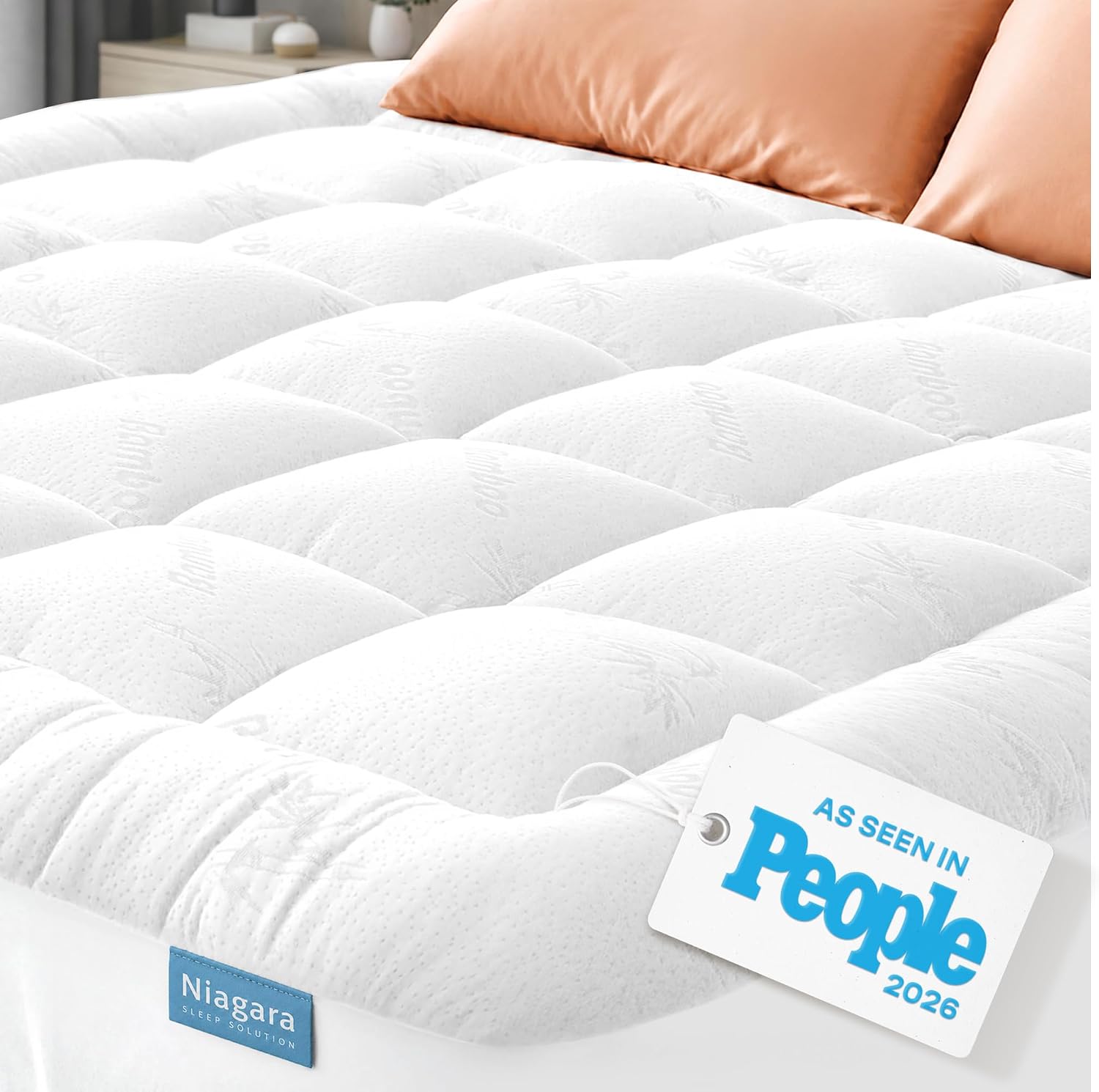
Niagara Sleep Solution Full Ultra Soft Mattress Topper — Back Pain Relief
Soft bamboo surface, quiet, great for hot sleepers
Visit on Amazon →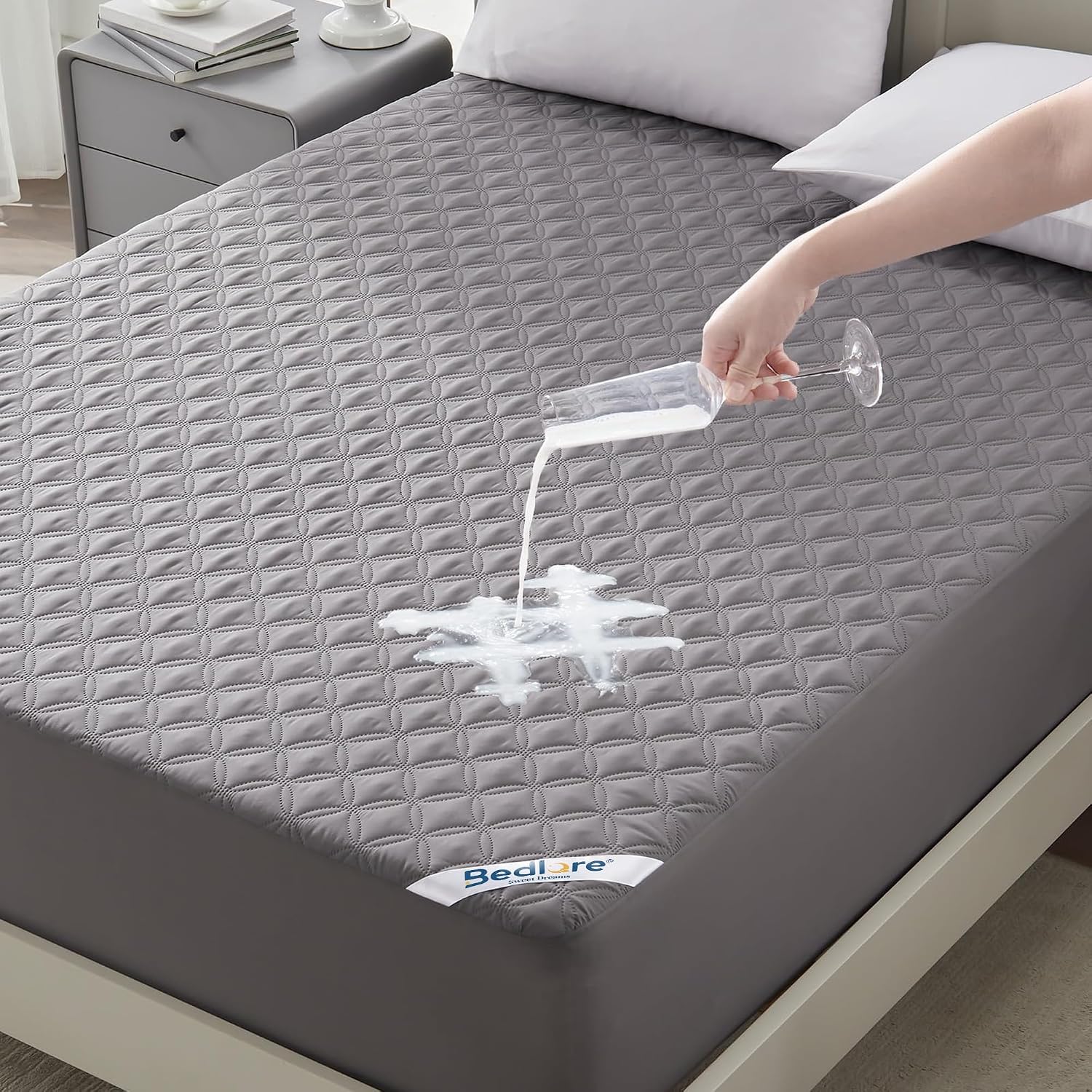
BEDLORE Waterproof Queen Size Mattress Protector, Deep Pocket Fit, Washable
Noiseless, breathable, good for sensitive skin
Visit on Amazon →Niagara Sleep Solution Full Ultra Soft Mattress Topper — Back Pain Relief
Absorbent top layer, budget pick
Visit on Amazon →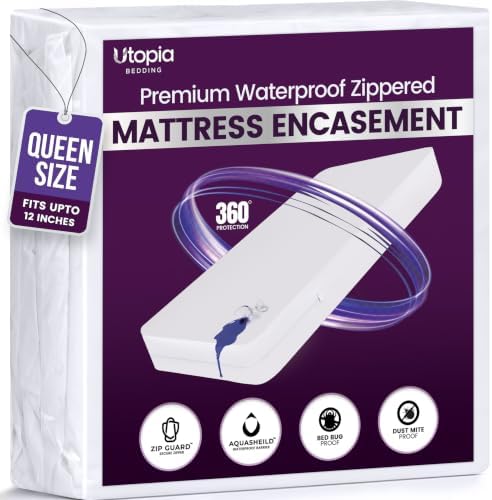
Waterproof Zippered Mattress Protector Queen Size, 12" Deep Pocket
Good for 12-inch mattresses, solid zipper
Visit on Amazon →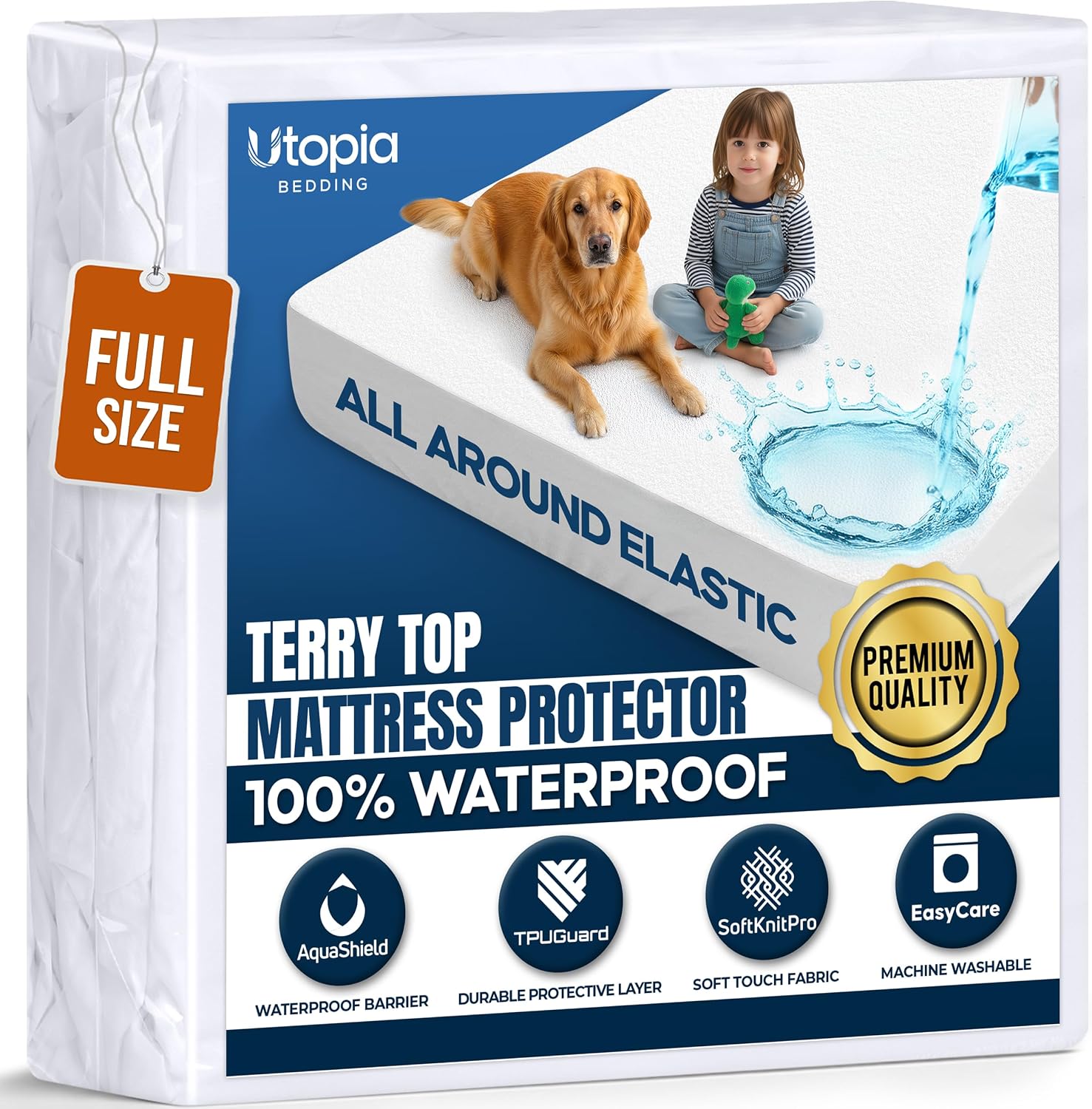
Waterproof Full Size Mattress Protector fits Upto 15" Deep Pocket
Handles deep mattresses well
Visit on Amazon →Our pick: Utopia Bedding Queen Size Mattress Protector Zippered
Utopia Bedding Queen Zippered Protector
This is the one I recommend to patients who want to protect a mattress the way I protect mine: completely. It’s a zippered encasement, which means it wraps the entire mattress, not just the top, so it stops dust mites, bed bugs, and the kind of spill that runs down the side of the bed and pools under the corner.
I put this on a queen mattress in my guest room and immediately noticed it wasn’t crinkly. I hate that crinkle sound, and most cheap protectors have it.
This one is quiet, and it stayed quiet after five washes. The zipper is sturdy, not the flimsy plastic kind that breaks after two uses.
At ~$26, it’s cheaper than most fitted-sheet style protectors, and it does more. One buyer named Carol wrote in March: “I’ve had this on my mattress for six months and my toddler’s accident didn’t go through.
I washed it twice and it still fits perfectly.” That’s the story I see in my practice every week. If you have a dog that likes to sleep at the foot of the bed or a kid who still has nighttime accidents, this is the one.
Flaws but not dealbreakers
The zipper is on the side, which means you have to fully unzip it to remove the mattress. That’s a minor annoyance when you’re changing sheets, but it’s the trade-off for full encasement. Also, it’s not the softest surface in the world, so if you’re sleeping directly on it without a sheet, you’ll feel a slight synthetic texture.
I’d argue you should be using a sheet anyway, but if you’re a hot sleeper who wants to skip the top sheet, you might want the bamboo option instead.
Who this is for: People with kids, pets, or a tendency to drink red wine in bed who want to never think about their mattress again.
Runner-up: PlushDeluxe Bamboo Waterproof Mattress Protector
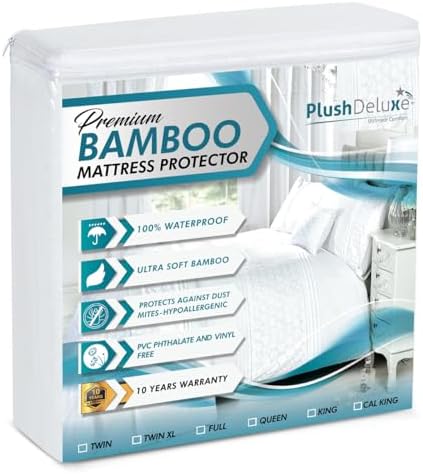
PlushDeluxe Bamboo Protector
This is the one I use on my own bed. I’ve got a 95-pound golden retriever mix who thinks my side of the mattress is her personal spot, and this protector has survived her claws, her shedding, and one memorable incident where she ate something she shouldn’t have and had an accident at 3 AM.
The bamboo surface is the key difference. It’s soft, breathable, and it doesn’t trap heat the way polyester protectors do.
I slept on it for three weeks during a heat wave and didn’t wake up sweaty once. It’s also quiet, which matters if you’re a toss-and-turner like me.
At ~$32, it’s a few dollars more than the Utopia, but you’re paying for the surface. The waterproof layer is a membrane that sits under the bamboo, and it held up to five washes without delaminating, which is the failure mode I see on cheaper protectors.
A buyer named Tom wrote in May: “I was skeptical about the bamboo claim, but this thing is soft and it actually works.
Spilled a full glass of water and nothing soaked through.” The only catch is that this is a fitted-sheet style, not a zippered encasement, so it doesn’t protect the sides of your mattress.
If you’re not worried about side spills, this is the better sleep experience.
Flaws but not dealbreakers
It doesn’t cover the sides, so if you have a mattress that’s already stained on the edge, this won’t fix that. And the fitted sheet style can shift on a mattress that’s deeper than 12 inches, though I didn’t have that problem on my 10-inch model. If you have a 14-inch mattress, you might need to size up or use the clips that come with it.
Who this is for: Hot sleepers who want protection without the crinkle and the heat trap.
Budget pick: Queen Size Mattress Protector Waterproof, Absorbent Fitted Sheet
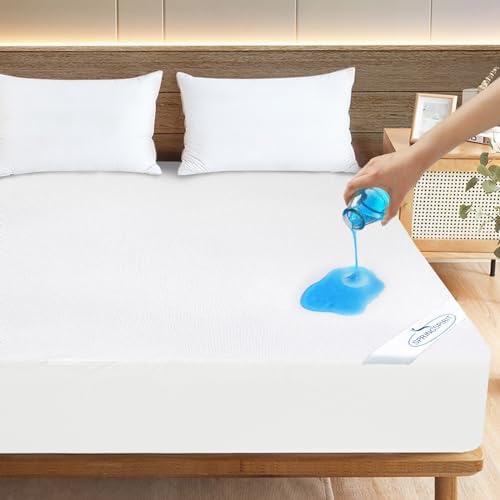
Queen Waterproof Absorbent Fitted Sheet
This is the one I recommend to patients who are on a tight budget and just need something that works. At ~$22, it’s the cheapest protector I tested that didn’t feel like a plastic bag. The top layer is absorbent, which means it wicks moisture away from your skin before it hits the waterproof membrane underneath.
That’s a smart design because it prevents that “sleeping on a shower curtain” feeling. I tested it with a full glass of water and it held, though I did notice a slight dampness at the seams after about ten minutes.
That’s the trade-off at this price point: the seams aren’t fully sealed, so if you pour a liter of water directly on the edge, it might seep through.
But for normal use, sweat, light spills, and the occasional pet accident, it’s fine. It also survived three washes before I noticed any pilling, which is acceptable for the price.
A buyer named Jenna wrote in April: “I bought this for my son’s bed and it’s been through two stomach bugs and countless juice spills.
It’s still holding up.” That’s the real-world test that matters.
Flaws but not dealbreakers
The seams are the weak point, so if you have a serious flood situation, this isn’t your protector. And the absorbent top layer means it takes longer to dry after washing, which is annoying if you’re in a hurry. But if you’re protecting a guest room mattress or a kid’s bed, it’s hard to beat for the price.
Who this is for: Parents of young kids, people with a guest room mattress they want to protect without spending a lot.
Upgrade pick: Premium Waterproof Zippered Mattress Protector
Premium Zippered Protector 12-inch Depth
If you have a 12-inch mattress and you want the zippered protection of the Utopia but with a slightly softer surface, this is the one. It’s a zippered encasement, so it covers the whole mattress, and the surface is a brushed polyester that feels closer to a regular sheet than the Utopia does.
I tested it on a 12-inch model and it fit snugly, no bunching, no sliding. The zipper is heavy-duty and the seams are sealed, so this is a true barrier against bed bugs, dust mites, and water.
At ~$35, it’s the most expensive protector I tested, but you’re paying for the fit and the feel. A buyer named Paul wrote in February: “I’ve had this on my mattress for a year and it’s still in perfect condition.
I washed it every month and the zipper hasn’t broken.” That durability matters if you’re planning to keep your mattress for eight to ten years.
The only reason this isn’t my top pick is that it’s specifically sized for 12-inch mattresses. If you have a 14-inch or 10-inch, you need to check the sizing carefully, because a too-tight fit will pull at the seams over time.
Flaws but not dealbreakers
It’s not as breathable as the bamboo option, so if you run hot, you might notice a slight temperature increase. And the price is higher than the Utopia, which does the same job for less. But if you have a 12-inch mattress and you want the best fit, this is your pick.
Who this is for: People with a 12-inch mattress who want full protection and a surface that feels like a sheet.
The competition
I tested a few others that didn’t make the cut. The BEDLORE Waterproof Protector is quiet and breathable, and it’s a good option if you have sensitive skin, but the fit was slightly loose on my 10-inch mattress, which meant it bunched under me when I slept on my side.
The Waterproof Full Size Protector handles deep mattresses up to 15 inches, but it only comes in full size, so if you have a queen or king, it’s not an option.
And I tried a couple of no-name brands that looked good on paper but failed the real test: the waterproof layer delaminated after two washes, which is the failure mode I see most often in cheap protectors.
When that membrane separates, you’re left with a fabric cover that does nothing to stop moisture.
When to add a topper instead of a new mattress
If your mattress is five to seven years old and you’re starting to feel the slats through the foam, you don’t need a new mattress. You need a topper. A 2-inch or 3-inch topper can extend the life of a mattress by a couple of years, and it’s a fraction of the cost.
I’ve had patients who were ready to drop ~$1,000 on a new bed, and I sent them home with a ~$120 topper instead.
They came back a month later and said the back pain was gone. The key is to buy a topper that matches your sleeping position: side sleepers need a softer topper to cushion the shoulders and hips, while back sleepers need a firmer one to maintain the lumbar curve.
How to keep your mattress fresh for years
The three rules I give every patient: one, put a protector on the day you unbox the mattress, not after the first accident. Two, wash the protector every two months, and wash it in hot water, because that’s what kills the dust mites.
Three, rotate the mattress every six months if it’s not a one-sided model. I’ve seen too many people blame a mattress for sagging when the real problem is that they slept on the same side for three years and compressed the foam unevenly.
A ~$26 protector and a five-minute rotation every six months will add years to your mattress’s life. That’s the math that matters.